Tuesday, September 17, 2013

10 Rules for Keeping Parents Happy


My own kids soar because of the
fantastic teachers they have had!


1. Take care of their kids.  Make sure they know that their children are your top priority while you are at school.  And mean it.  They should be.

2. Keep in touch with them.  Sending out a weekly email to keep parents updated on the goings-on of your classroom shouldn't be an extra chore: it's just what you do.  It's your job.  Parents deserve to know.

3. Answer their emails.  Pronto.  Even if you can only say, "I'm busy at the moment, but I'll get back to you as soon as I am able," is polite, professional and puts you in their good books.

4. Be a partner with them and respect their choices.  With the child in the middle of the huddle, you're a team.  Make sure they know it.  Make sure their child knows it.

5. Adopt an open-door policy.  I let my parents know that I am always happy to see them, provided we set up a time in advance.  The more open you are to discussion, the less likely they are to come knocking down your door later.

6. Build your relationships now and nurture them throughout the year.  I know many excellent teachers, but they don't build the parent/teacher bond that is essential to giving your students their best year possible, and that actually, in the long run, makes your life easier.  Building trust with parents should be one of your top priorities.

7. Be sure to let parents know when their children do something commendable, even if it's just in a two sentence email.  They appreciate it and so do their kids.

8. Don't try to come off as a know-it-all, but as a partner with them in their child's learning.  Ask parents for their advice on how to best help their child.  Their insights could make YOUR year a lot easier, and will help you differentiate more effectively for each child's individual needs.

9. Be warm and positive.  Always start your conversations with a smile, a confident handshake and a positive comment about their child.  Sure, you may have to bring up some hard-to-handle issues, but there is ALWAYS something good to say.  That's what you lead off with and that's what you end with.  Always.

10. Don't try to hide things from parents.  If something "goes down," let them know.  If you need to apologise, do so.  If you messed up, own up.  Parents respect teachers who aren't perfect: more than anything, they want teachers who care.

And we do, right?  Why else would we be in this medium-paying gig if we didn't care as much as we do?

Monday, September 9, 2013

Making Thinking Visible While Measuring Angles


Warning: Unless you are familiar with both "Making Thinking Visible" and an inquiry-based teaching approach, you may not find this particular blog useful.  If you are, please read, comment and add your suggestions!  I don't profess to be an expert by any measure or degree.  (I'm making a funny...)


I will soon be starting an inquiry into angles in mathematics, which fits well with How the World Works and our primary six/grade five study of structures.

After taking the "Making Thinking Visible" online course offered through Harvard as a staff last year (google it to find all the thinking routines/take the course to dramatically improve your teaching and your CV!), it has become clear to us all how well the thinking routines fit in with our inquiry model in a PYP school.  Last year, I used them extensively within my transdisciplinary themes, but this year I'm getting more comfortable using them in stand-alone mathematics planners.

The conceptual understanding I want students to arrive at is: Angles can be measured and constructed for a variety of purposes.

In order to do this, students are going to start by doing a THINK/PUZZLE/EXPLORE routine.  This can be used as a mini assessment.


Students will make obviously connections that go beyond geometry.  Angles are a very important concept in geometry though they are not often thought about in our daily lives. However, angles impact our lives in more ways than we think. Students will begin to understand that we all use angles without even realizing.

We will do a THINK/PAIR/SHARE with the following questions:
1.              How do people in various professions use angles to complete their work?
2.              How do all people use angles in their everyday lives?
3.       How do you use angles?

After time spent walking around the school in pairs and identifying angles, then coming together to list them, students will get an “Angle Facts Worksheet” in which they will have to draw the examples they found. 

Students will also undertake a “building a house” activity that promotes understanding of angles; students will do the CREATIVE HUNT thinking routine with the word TRIANGLE, identifying its parts and purposes (How does it work?); the main purpose (What is it for?); and the audience (Who is it for?).  Students will make a ‘target diagram to explore this idea.

After ample inquiry time, students will watch two khanacademy.org videos on identifying and measuring angles.  After they complete their viewing, they will do the CONNECT/EXTEND/CHALLENGE routine.

Students will then engage in some Mathletics exploration and problem solving to do with angles and finally do a HEADLINE routine to summarize their overall understanding of the importance of angles.  This will serve as a good summative overview.


 Reflections on planning a mini-inquiry using the thinking routines:

By using the “backwards by design” planning model in addition to incorporating the visible thinking routines in my mini-inquiry into angles, I feel really empowered about how I can teach students to think and explore through mathematics without using direct instruction at the outset.  Though it wasn’t my intention, I find it interesting that I used three UNDERSTANDING ROUTINES (Connect/Extend/Challenge, Think/Pair/Share, and Headlines) while planning an inquiry into angles.  It makes sense in that this is a rather straightforward concept, but can be taught/learned with a depth that I haven’t explored before as a learner or as a facilitator.

The fact that I plan to use a CREATIVITY ROUTINE (Creative Hunt) will also be an interesting trial: I'm hoping it will allow us to see that you can go beyond basic facts in geometry and see things from different angles.  (Pardon the pun!)  I like the idea of extending student thinking beyond the factual and exploring the creativity and play behind things, even when dealing with empirical, proven information.

I'm so thankful that I am learning how to be playful in mathematics, and teaching my students to be the same.  The best part?  They're learning more deeply through their exploration and play, and they're having fun.  You can't argue with that combination, can you?

Monday, September 2, 2013

The Happiness Component to Learning


Today's blog isn't one about how to facilitate learning so all students will learn in a way that suits them and is appropriately differentiated.  We'll leave that for another day.  Besides, for anyone bothering to read a teaching blog about inquiry, there are resources up the ying yang at your fingertips.

Today's blog is simply about remembering to keep it fun.   It's the beginning of the year for most of us, and that means right now we have the opportunity to set the tone for a community of learners that we'll be a part of for the next nine or ten months.

Pretty much everybody learns best when they are having fun.  No, we're not paid to be entertainers, and, no, every lesson doesn't need to be a barrel of laughs, but the day can be planned in such a way that levity, joy and pleasure are an important component of it.  This includes your delivery and facilitation of lessons as well as all the moments in the day where we have the opportunity to help students feel positive and happy to be at school.


In The Happiness Advantage by Shawn Achor, he writes:

"We become more successful when we are happier and more positive.  For example, doctors put in a positive mood before making a diagnosis show almost three times more intelligence and creativity than doctors in a neutral state, and they make accurate diagnoses 19 percent faster.  Optimistic salespeople outsell their pessimistic counterparts by 56 percent.  Students primed to feel happy before taking math achievement tests far outperform their neutral peers.  It turns out that our brains are literally hardwired to perform at their best not when they are negative or even neutral, but when they are positive."

Isn't it great news that we can improve student assessment simply by helping them get in a resourceful, happy state?  I love this research!  What are some ways in which to do this that take place in the day-to-day workings of a classroom?  Here's a few ideas just to get you started, but I'm sure you can come up with a bucket load of your own.

  • Compliment your students.  When you notice them doing something kind or on-task or things that are part of the Learner Profile or Attitudes, be sure to take a few seconds to honor them publicly.
  • Pull students aside privately on a regular basis for quick one-on-one pep talks where you let them know how much potential you think they have, and how impressed you are with particular aspects of their performance or abilities or personalities.  
  • Send individual emails to students with short but sweet comments such as, "I really appreciated how willing you were to help out your group during collaborative problem solving today.  Way to go!"  It only takes a minute of your time, but the delight and ensuing motivation of such comments (not to mention the parent appreciation) long outweigh the "trouble" it takes to write a few a day.
  • Tell a joke a day (or five or six).
  • Share inspirational quotes.  Sometimes I use quotes (with deliberate mistakes) for my DOL (Daily Oral Language) practice so students can get a dose of inspiration while figuring out the structure and use of language.
  • Allow for laughable moments.  If someone says or does something funny, join in.  Show them you like to have fun too.  
  • Put up a daily cartoon for students to read when they come in to class.
  • Tell funny stories about yourself when you were their age.  Students always love to hear about their teachers' follies and mistakes!
  • Inquiry based learning encourages game playing.  Make sure your learning areas are full of games that are fun and help students meet your set objectives.
  • Have fun with your colleagues. That joy will be translated to your students.


When push comes to shove, we all have to go to school five days a week.  So do our students.  Why don't we all decide to have fun doing it?


Wednesday, August 28, 2013

Strict, Not Mean


I'll never forget the student who came to me near the end of the year and said something to the effect of, "I went around telling everyone that you were mean, but then I learned the right word.  You're strict."

(To my credit she also added that I was fair, and pretty and that she loved me.)

I actually like having the reputation of being a strict teacher, so long as nobody thinks I am cruel or unfair.  A better way of saying it these days is that I have high expectations for all of my students.  (And for myself.)

When we hold students to high expectations both behaviorally and academically, they tend to meet them.  In the essential agreements our class wrote together this year, the students actually talked about how they wanted to hold themselves accountable for their thinking, their work and their behavior. I felt so proud of both them and the stellar school I teach at that has taught them to expect the best of themselves and others!

Students (at least in primary school), often come up to their teachers with their work and say,"Is this good enough?"

My response is always, "I don't know.  Is it?"

The answer is often a sheepish look and a mumble of, "I guess I could __________."

By and large, students know what to do to improve the quality of their work, though they may not know HOW to do it.  That's where we teachers come in: those one-on-one moments, the mini-lessons, the guided reading sessions, the impromptu "Hey, I noticed _______: do you mind if we take a few minutes together to figure that out?" are some of the most powerful learning moments for students and forge some of the most trusting relationships where students know they're not going to be labelled as dumb, but they're going to be accepted for where they're at, and helped to advance a bit further.

I hope the fact that I take the time to share and chat and demonstrate and sit down on the carpet and read with a kid even though my back really hurts mitigates my reputation for strictness.  Also, laughing long and hard about twenty times a day, telling really great stories and listening to their sometimes really boring stories with genuine enthusiasm probably helps.

I'm not too worried about being mean.  And, anyway, aren't you supposed to start off the school year being really mean?

Does this look like a teacher students are afraid of?


Sunday, August 25, 2013

Some Great Inquiry Resources

School has started and my professional reading has been kick-started after a summer of beach reads and fluffy magazines.  (Okay, I always read fluffy magazines!)

These are some of the books that I've been delving into lately or have been referring back to.  Good chance they are in your school's professional library.  Have you looked through it lately?  If they're not there, they are worth making your own personal investment in!


About Teaching Mathematics: A K-8 Resource by Marilyn Burns.  This is a comprehensive text that helps teachers teach math in a way that builds understanding and skills, with a focus on inquiry-based, often open-ended problem solving.  

Classsroom Connections: Strategies for Integrated Learning by Kath Murdoch.  In her own words, "The best topics are built around big ideas that engage students in learning about significant, robust and transferable ideas."  This books is chock-full of strategies to help your students do exactly that!  It's one of my all-time favorites...

Understanding by Design  by Grant Wiggins and Jay McTighe  This is a resource to help YOU help kids dig deeper into their projects through thoughtful planning. It's indispensable if you're committed to an inquiry-based learning environment! 

How to Differentiate Instruction in Mixed-Ability Classrooms by Carol Ann Tomlinson.  Differentiation isn't only a buzz-word, it's a must-do.  This is a no-nonsense guide on how to really think, plan and actualize differentiation across the curriculum in your classroom.

Engaging Readers and Writers with Inquiry by Jeffrey D. Wilhelm.  This was recommended to me by a teaching colleague, though I haven't read it yet.  I'm excited to get to it!  It seems like it will fit right into "Making Thinking Visible" routines we already use at our school, and, of course, our PYP curriculum.

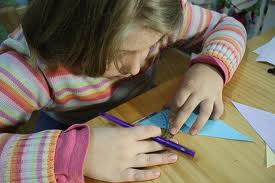
My kids giving an example of why
inquiry and critical thinking are
so important!

Happy reading!  Remember: even five minutes a day of professional reading is going to improve your teaching practice.


Tuesday, August 20, 2013

The Night Before School Starts: One Teacher's Perspective


How happy are we?  JIS: one of the happiest places on earth.
 Even better than Disneyland!

My students start tomorrow, and while I'm excited, I'm not all atwitter, and I certainly have no impending sense of doom or dread.  I graduated with my bachelors of education degree 26 years ago, and I still love this job.  (That being said, I have chosen my teaching positions wisely and gotten out of ones that have been less than fulfilling.)

I remember those first day jitters I used to get, and I don't miss them.  Tonight I feel calm and collected and happy that tomorrow I will begin a journey with a whole new set of kiddos.  I plan to knock their socks off with excitement for learning, to inspire them, and to find a special place in my heart for each one of those whippersnappers.

It's funny because every year I look at the upcoming students and think,"Oh no, I'm not going to like them.  There's no way they'll ever beat the class I have this year."

Of course I adore this student, because she's my dirty-kneed
daughter.  How lucky am I to teach in the same school
 that my kids attend?

Regardless, within the first week of the new brood coming in, I am already thinking, "This is the best class I've ever had.  I  love these kiddos!"

I am sure this year will be exactly the same as it has been for the last couple of decades.  At this rate of enjoyment with my job, I could last another couple of decades.  It sometimes scares me how much I love my job because it IS enormous and the responsibility IS huge, and I have been entrusted with a cluster of starlets and it's my job to tug them higher and brighter into the night sky so they shine and inspire and grow into full-grown orbiting suns.

How cool and scary is that?  Should they pay us more? You bet!  Do we do it for the money?  Of course not.  Do we do it for the holidays?  Only just a very little bit.  Every teacher worth his or her weight in gold (and there are a lot of us) are in this gig because we know we are making a difference, and that our nurturing and facilitation is going to bring forth global citizens who will pay it forward and make a big difference in other's people's lives one way or another,  and it will go on and on just like that Clairol hair commercial from 20 odd years ago.

I want my students to be smart and knowledgeable and turned on to learning, but mostly I want them to be happy and grow up happy and to go on to help other people to be happy.  Maybe that's simplistic (and it's not acknowledging all the myriad of skills and learning we teachers are indeed working diligently on imparting), but in the end, I wish more than anything else for the happiness and well-being of my students both now and into their futures.

After all, what is life for if not to be happy?

I'm off to choose my clothes for tomorrow and to settle in for a restful sleep.  If there are butterflies tomorrow, they will be beautiful ones.

Happy first day of school, my colleagues and students and parents.  It's going to be a bang-up year!

We teachers like each other so much that we even
choose to socialize together!


Monday, August 19, 2013

A New Understanding of Concepts Courtesy of "Making the PYP Happen"


I'm leading my first PYP workshop in Mumbai in September so I thought this weekend would be a good time to do some rereading of "Making the PYP Happen."  (I hear a lot of the PYP aficionados in India can quote it verbatim, even giving page numbers and paragraphs.)

In my intimidation and, of course, my attempts at preparation, I am rereading this important document with a serious demeanor, green highlighter and post-it notes in hand.  I'm the first to admit that I am more than a bit intimidated that I am being entrusted with imparting IB wisdom or at least facilitating IB discussion amongst colleagues, many of whom will be more experienced and adept than I am at embracing and USING this framework for constructivist learning.

I thought I really knew this document, but there are so many things that are jumping out at me on nearly every page.  The section on concepts has given me my biggest "I really needed to reread and remember that" moments thus far.  I'm certain there will be many more such jolts as I continue my re-education.

According to "Making the PYP Happen," the concepts are key: they "drive the curriculum," but sometimes they have driven me a bit crazy in the sense that I have a hard time explaining them and thus using them as effectively as I might with my students in their inquiries.  They key questions have always challenged me just a bit.  I don't always completely get them.  Do you know what I mean?  (And should a woman who has been practicing PYP for 11 odd years and who is a workshop leader be admitting this on a public blog?  Probably not.  Let's just say I'm a lifetime learner and someone who forgets easily so I have to do a lot of re-learning.)

Anyway, as I studied my PYP bible today, and came to the concepts section of the Essential Elements, I realized I had not looked at it in a long time.  Big aha: for each concept, there is not only a key question, but a definition, a rationale, and examples of related concepts.  Now, I'm not admitting that I didn't know this; I'm just saying I haven't looked at this in a while and suddenly I am feeling much more conceptually confident.


Let me give you an example of what I'm talking about complete with my own thought bubbles, in case you can't rush right over to your own "Making The PYP Happen" and see for yourself.

Concept: Causation

(This is one of the eight concepts that I actually find the most challenging.  I've never been that good with cause and effect.  Maybe that's why I keep making the same mistakes over and over...)

Key Question:  Why is it like it is?

(We all know this question inside out and ask it all the time, right?)


Definition: The understanding that things do not just happen, that there are causal relationships at work, and that actions have consequences.

(Now why couldn't I share that definition (and all the others) with my students?  Of course I could!  (I'm sure many of you have it prominently displayed in your classroom.  I do, but the typeface is so small, I can't even read it. Tomorrow I enlarge.) As soon as I read the definition again today, I had a whole new understanding of this concept and its key question.  It helped me enormously.)

Rationale: This concept was selected because of the importance of prompting students to ask "Why?" and helping them to recognize that actions and events have reasons and consequences.  The analysis of causal relationships is significant within and across all disciplines.

(Thank you, IB!  I had forgotten that you have given us rationales for why PYP is constructed the way it is.  These rationales are embedded throughout the entire document.  It's very reassuring!  I know what I am doing works, but understanding why and how it came about lends a fair bit of credibility to this framework we've all bought into, doesn't it?)

Examples of related concepts: Consequences, sequences, pattern, impact.

(Those sure seem like mighty transdisciplinary concepts too, don't they?  Yahoo!)

Each of the concepts are unpacked in this same manner.  Form, function...you name it.  I'm all ready to dive into a conceptual cocktail of learning with my students this year and to figure it out together.  (Admittedly, cocktail is not the best word to use in conjunction with students and IB, but I liked the alliteration.)

So...even if you're a "seasoned professional" why not do some rereading of your IB documents to refresh and invigorate your practice?  Don't do it all at once: just a few pages a day, maybe five or ten minutes, with or without a cocktail in hand (probably without, especially if you're still at work).

Your students (and admin) will thank you!